

Rolex Sea‑Dweller vs Submariner (Which to Choose?)
Rolex Sea‑Dweller vs Submariner (Which to Choose?)
Picture this: you’re at a boutique or scrolling a trusted pre-owned platform, and two legends stare back at you – the Rolex Submariner and the Rolex Sea‑Dweller. Same iconic Oyster case, same timeless dive watch DNA, same coronet on the dial. But one question stops you: Sea‑Dweller vs Submariner – which is actually right for you?
On paper, the difference between the Submariner and Sea‑Dweller looks straightforward: depth rating, thickness, price. But when you put them on the wrist, the story changes. The Submariner is the archetypal daily diver; the Sea‑Dweller is the “no compromise” tool watch. Your lifestyle, wrist size, and collecting goals will quietly decide which one makes more sense.
In this article, you’ll walk through how these two models evolved, how they wear, the technical differences that matter in real life, and how each behaves in today’s market. By the end, you’ll know whether your heart – and wrist – belongs with the Submariner or the Sea‑Dweller.
Table of Contents
- 1. Sea‑Dweller vs Submariner: The Real Decision
- 2. A Quick Heritage Snapshot
- 3. Core Specs: Where They Really Differ
- 4. How They Wear on Real Wrists
- 5. Use Case: Desk Diver or Deep Diver?
- 6. Sea‑Dweller vs Submariner Resale Value
- 7. How to Choose: Profiles & Scenarios
- 8. Buying Pre‑Owned: What to Look For
- 9. Frequently Asked Questions
- 10. Key Takeaways
- 11. Final Thoughts
- 12. Selection Note & Sources
1. Sea‑Dweller vs Submariner: The Real Decision
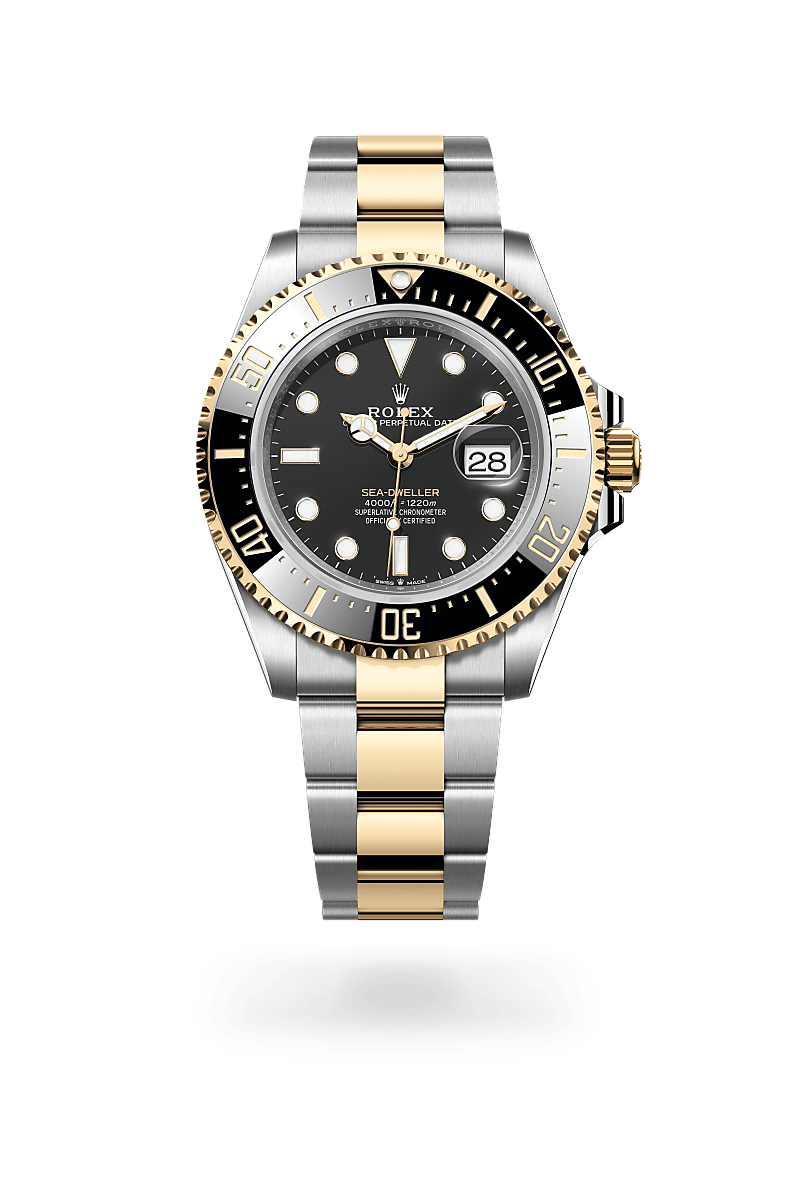
When you hear collectors debate Submariner vs Sea‑Dweller, it often sounds like a spec sheet comparison. But you’re not buying a spreadsheet; you’re buying something you’ll live with every day.
The Submariner started life in 1953 as a diver that could follow you from sea to dinner table. The Sea‑Dweller, born in 1967, was Rolex answering saturation divers who outgrew the Sub’s limits. That difference in purpose still shapes both watches today.
So the real decision isn’t “which is better?” It’s: do you want the ultimate all-rounder (Submariner) or a more extreme, slightly more niche professional instrument (Sea‑Dweller)? Everything else – thickness, price, resale – flows from that.
2. A Quick Heritage Snapshot
You don’t need a full Rolex history lesson, but understanding where each model comes from makes the Sea‑Dweller vs Submariner debate much clearer.
2.1 Submariner: The Icon
Launched in 1953, the Submariner quickly became the blueprint for the modern dive watch. Early references like the 6204 and 6205 had simple gilt dials and bidirectional bezels, evolving into the now-classic 5512 and 5513 that you see in vintage auctions today. Over time, water resistance improved, materials evolved to 904L (now called Oystersteel), and ceramics replaced aluminum bezels.
Today’s core references include:
- 124060 – Submariner no-date, 41 mm, Oystersteel
- 126610LN – Date version with black bezel
- 126610LV – Green bezel “Starbucks” / “Cermit”
The Submariner moved far beyond pure tool watch status, becoming a cultural icon worn by everyone from divers to CEOs.
2.2 Sea‑Dweller: The Specialist
The Sea‑Dweller arrived in 1967 with reference 1665, developed with COMEX, the legendary French commercial diving company. Saturation divers faced a specific problem: helium buildup inside the watch during decompression. Rolex’s answer was the helium escape valve, a pressure‑sensitive valve in the case allowing helium to exit without damaging the watch.
Key modern references include:
- 126600 – Sea‑Dweller in 43 mm steel with Cyclops and red text
- 126603 – Two‑tone Rolesor steel and yellow gold
- 126660 / 136660 – Deepsea variants (up to 3,900 m rating)
While the Submariner became the universal luxury diver, the Sea‑Dweller stayed closer to its role as a hardcore professional tool, then slowly crept into mainstream awareness as collectors embraced larger, more technical watches in the 2000s.
3. Core Specs: Where They Really Differ
On the surface, the difference between a Rolex Submariner and Sea‑Dweller is simple, but there are several small details that will affect how much you actually enjoy wearing one.
3.1 Size, Thickness & Water Resistance
Let’s compare the current mainstream references: Submariner 124060 / 126610 vs Sea‑Dweller 126600.
- Case Diameter Submariner: 41 mm Sea‑Dweller: 43 mm
- Thickness (approx.) Submariner: around 12.5–13 mm Sea‑Dweller: around 15.1 mm
- Water Resistance Submariner: 300 m / 1,000 ft Sea‑Dweller: 1,220 m / 4,000 ft (Deepsea: 3,900 m)
Unless you’re genuinely doing saturation diving or serious technical dives, the Sea‑Dweller’s extra depth rating is overkill. But it does give you bragging rights and a thicker, more imposing presence.
3.2 Helium Escape Valve vs Simplicity
The helium escape valve on the Sea‑Dweller is a tiny but important difference. For saturation divers spending long periods in pressurized environments, it’s functional. For most owners, it’s more of a nod to professional heritage than something you’ll ever “use”.
The Submariner skips this feature, which means a slightly simpler case side and marginally slimmer profile. If you appreciate clean lines, that lack of a valve might actually be a plus.
3.3 Movements: Calibre 3230 vs 3235
Both models use Rolex’s current‑generation movements:
- Submariner no‑date 124060: *Calibre 3230* – time‑only automatic with about 70 hours of power reserve.
- Submariner Date 126610 & Sea‑Dweller 126600: *Calibre 3235* – time and date, also 70 hours, with the Chronergy escapement for improved efficiency.
Functionally, accuracy and robustness are very similar. Rolex regulates these to their “Superlative Chronometer” standard of −2/+2 seconds per day. From a daily use standpoint, movement choice is not the main deciding factor between these two lines.
4. How They Wear on Real Wrists
Specs are one thing. How they actually sit on your wrist is another. This is where the Sea‑Dweller vs Submariner decision often becomes obvious.
4.1 Wrist Presence & Proportions
The Submariner, especially in its current 41 mm form, wears very balanced. On a 6.5–7.25 inch wrist, it tends to feel “just right” – present, but not overbearing. Lug‑to‑lug length is manageable, and the case profile slides under most cuffs.
The Sea‑Dweller, at 43 mm, is only 2 mm larger on paper, but the extra thickness and tall crystal make it feel noticeably bulkier. On a 7+ inch wrist, that can look fantastic – like a modern tool watch with real substance. On smaller wrists, it may feel a bit top‑heavy.
4.2 Comfort Over a Full Day
Think about how you’ll use it. If this is your only watch and you’ll wear it at the office, on weekends, at dinners, the Submariner’s lower weight and thickness make it more forgiving. You’ll forget it’s there until you need to check the time.
The Sea‑Dweller is comfortable thanks to Rolex’s excellent Oyster bracelet and Glidelock clasp, but you’re always aware of its mass. Some owners love that “tank on the wrist” feeling. Others realize after a few months that they wanted the look more than the bulk.
4.3 Try‑On Stories: Three Common Experiences
You’ll often hear similar stories from collectors:
- The “Everyday Guy”: Wears a Sea‑Dweller in the boutique, loves the presence, but after comparing, realizes the Submariner feels more natural and versatile.
- The “Big Wrist Collector”: Has a 7.5+ inch wrist, finds the Submariner slightly small visually, and the Sea‑Dweller fills the wrist perfectly.
- The “Two‑Watch Strategy”: Uses a Submariner Date as a daily watch and adds a Deepsea or Sea‑Dweller later as the “fun” extreme tool piece.
Where do you fit in those scenarios? That’s often your answer.
5. Use Case: Desk Diver or Deep Diver?
The difference between Rolex Submariner and Sea‑Dweller really shows when you think about the life you’ll give the watch, not just its technical sheet.
5.1 Everyday Versatility
The Submariner has a superpower: it looks at home almost everywhere. Swim trunks, polo shirt, linen shirt at dinner, even a smart business outfit – it just works. That’s a big reason it’s one of the most copied designs in watchmaking.
The Sea‑Dweller, with its thicker case and slightly more aggressive dial text, leans more “sporty tool watch”. It can accompany you to the office, but it’s less subtle. If you prefer watches that whisper rather than shout, the Sub is safer.
5.2 Real Diving & Water Use
Here’s the honest bit: for recreational diving, snorkelling, pool use, and general water life, the Submariner’s 300 m rating is already well beyond what you’ll need. Thousands of dive professionals used Subs long before the Sea‑Dweller existed.
The Sea‑Dweller’s advantage starts if you do saturation diving or very serious technical diving – the kind that involves helium‑rich environments. Few owners will ever test that limit. If you know you’re that person, you probably already lean Sea‑Dweller. If you’re not, the extra rating is more about satisfaction than practicality.
5.3 Under‑the‑Radar vs Enthusiast Signal
Rolex Submariner vs Sea‑Dweller can also be about how “inside baseball” you like your watch choices. The Submariner is instantly recognizable, even to people who don’t know watches. The Sea‑Dweller flies a bit more under the radar with the general public but signals “I know my tool watches” to enthusiasts.
If you enjoy that more niche, insider choice, the Sea‑Dweller has real appeal. If you want the benchmark icon, the Submariner is exactly that.
6. Sea‑Dweller vs Submariner Resale Value
Now to a topic everyone quietly thinks about: sea‑dweller vs submariner resale value. Neither should be bought only as an investment, but you’re right to care how they hold up.
6.1 Market Demand & Liquidity
The Submariner is one of the most in‑demand references in the entire Rolex catalogue. Both new and pre‑owned markets reflect that – it’s extremely liquid. If you ever decide to move it on, there is almost always a buyer, especially for classic black models like the 124060 and 126610LN.
The Sea‑Dweller, while absolutely respected, sits in a slightly narrower niche. Demand is healthy, but not as broad. That can mean more stable prices over time but slightly slower selling if you’re in a hurry.
6.2 Price Trajectory (Recent Years)
From around 2020–2024, both lines saw strong demand, peaking during the broader luxury watch boom and then cooling slightly as the market normalized. Auction results and secondary market listings tracked by platforms like Chrono24, WatchCharts, and reports cited by Hodinkee showed Submariners generally trading at stronger premiums over retail than Sea‑Dwellers.
By 2025, the pattern still holds: steel Submariners, especially black no‑date and black date, tend to be among the more resilient modern Rolex sports models. Sea‑Dwellers hold value well but don’t usually command the same percentage premium.
6.3 Which Holds Value Better?
In a straight sea‑dweller vs submariner resale value comparison, the Submariner usually wins on three counts:
- Broader global recognition and demand
- Timeless, conservative design that’s unlikely to fall out of favor
- Strong track record at auctions and on the secondary market
The Sea‑Dweller can shine in special references, like early 126600 red‑text examples or vintage “Double Red” 1665s, but for mainstream modern models, the Sub is generally the safer value play.
7. How to Choose: Profiles & Scenarios
You might be wondering: “All right, so which one should I actually buy?” Let’s match watch to wearer.
7.1 Choose the Submariner If…
The Submariner tends to be the better choice if:
- Your wrist is under ~7 inches and you want a balanced, comfortable daily watch.
- This is your first serious luxury sports watch and you want something versatile and timeless.
- You care about resale and long‑term liquidity in case your collection changes.
- You prefer a cleaner look without a helium escape valve and extra dial text.
Think of the Sub as the “default answer” that is almost never wrong.
7.2 Choose the Sea‑Dweller If…
The Sea‑Dweller makes more sense if:
- You have a larger wrist and like a watch with more visual and physical presence.
- You’re drawn to the professional dive heritage and want something a bit more niche.
- You already own other versatile pieces and want a more hardcore tool watch in the mix.
- You simply love the look of the 43 mm case and thicker profile on your wrist.
In other words, you choose it less with your head and more with your heart – and your wrist size.
7.3 What About the Deepsea?
The Sea‑Dweller Deepsea (references like 126660 and 136660, including the “James Cameron” blue‑to‑black dial) is almost a category of its own. At around 44 mm and very thick, it’s a statement watch that demands a larger wrist and a clear taste for extremes.
If you’re hesitating between Submariner vs Sea‑Dweller, the Deepsea is probably too far in the “extreme” direction for most people as a first or only watch. It shines as a third or fourth sports watch in a collection.
8. Buying Pre‑Owned: What to Look For
Whether you’re leaning Sea‑Dweller or Submariner, the pre‑owned market in 2025 offers a lot of choice. That’s both a blessing and a trap if you’re not careful.
8.1 Reference & Generation Matters
In the Submariner line, older six‑digit ceramic references like the 116610 and 114060 wear slightly differently from the current 41 mm 126610/124060. The older ones have “maxi” cases with wider lugs and a more square stance. Some prefer that; others like the newer, more tapered profile.
For the Sea‑Dweller, you’ll find:
- 16600 – Classic 40 mm no‑Cyclops Sea‑Dweller, a favorite among purists.
- 116600 – Short‑lived modern 40 mm with ceramic bezel and no Cyclops.
- 126600 – Current 43 mm with red “Sea‑Dweller” text and Cyclops lens.
Each wears quite differently, so try to handle or at least study wrist shots before deciding.
8.2 Condition, Polishing & Original Parts
With sports Rolex, case condition matters a lot. Over‑polished lugs, rounded crown guards, or softened bezel teeth can significantly affect both value and character. Look for:
- Sharp transitions between brushed and polished surfaces.
- Correct dial, hands, and bezel insert for the reference and year.
- Bracelet stretch and clasp condition.
An unpolished or lightly polished example with correct parts will always be more desirable, especially with discontinued references.
8.3 Papers, Service History & Authentication
The ideal set includes box, papers, manuals, hang tags, and documented service history. But even if some accessories are missing, proper authentication is non‑negotiable. Counterfeiters have become sophisticated, especially with popular models like the Submariner and Sea‑Dweller.
Make sure your seller can:
- Open the case and verify the correct Rolex calibre and engravings.
- Provide serial and reference checks against known production patterns.
- Offer a clear description of any non‑original parts or refinishing.
Sources that emphasize authentication, transparent condition reports, and realistic pricing tend to attract serious collectors for good reason.
9. Frequently Asked Questions
9.1 What is the main difference between the Submariner and Sea‑Dweller?
The simplest difference is purpose and scale. The Submariner is a 41 mm, 300 m water‑resistant diver designed as a versatile everyday watch. The Sea‑Dweller is a 43 mm professional diver rated to 1,220 m, with a helium escape valve for saturation diving. On the wrist, that translates to the Sub feeling slimmer and more universal, while the Sea‑Dweller is thicker, heavier, and more “toolish”. Movements and overall quality are similar; it’s mostly about how extreme you want your dive watch to be.
9.2 Is the Sea‑Dweller worth the extra money over the Submariner?
It depends on what you value. If you have a larger wrist, love the idea of owning a more specialized, less common diver, and appreciate the history of saturation diving, the premium can feel justified. If you’re after an all‑rounder that works with everything and you don’t need the extra depth rating, the Submariner often makes more sense. From a purely financial perspective, the Submariner tends to hold value slightly better, so the Sea‑Dweller’s “worth” is mainly emotional and ergonomic rather than financial.
9.3 Which is better for small wrists: Sea‑Dweller or Submariner?
For wrists under about 7 inches (17.5 cm), the Submariner is usually the better choice. Its 41 mm diameter and slimmer case make it wear flatter and more proportionally. The Sea‑Dweller’s 43 mm size and extra thickness can cause it to overhang or feel top‑heavy on smaller wrists. If you love the Sea‑Dweller aesthetic but want something smaller, consider older 40 mm references like the 16600 or 116600, which provide Sea‑Dweller character in a more compact footprint.
9.4 Is there a difference in accuracy between the Sea‑Dweller and Submariner?
In practical terms, no. Both use Rolex’s latest‑generation calibres (3230 in no‑date Sub, 3235 in date Sub and Sea‑Dweller) and are regulated to the same Superlative Chronometer standard of −2/+2 seconds per day after casing. Any slight variation will come down to individual regulation, wear patterns, and service history. You’re unlikely to notice a real‑world difference in timekeeping between the two if both are healthy and properly serviced.
9.5 Which model has better resale value: Sea‑Dweller vs Submariner?
Broadly speaking, the Submariner has stronger resale performance and liquidity. Its global recognition and huge demand mean that well‑kept examples of references like the 124060 and 126610 trade very actively on the secondary market. Sea‑Dwellers hold value well, but appeal to a slightly narrower audience. As of 2025, you’ll typically see Submariners commanding higher premiums over retail than equivalent‑age Sea‑Dwellers, though rare or vintage Sea‑Dweller references can be exceptions at auction.
9.6 Is the Sea‑Dweller too big as a daily watch?
For some wrists, yes; for others, no. On a 7.25–7.75 inch wrist, many owners find the 43 mm Sea‑Dweller comfortable as a daily watch, especially if they prefer larger sports pieces. On smaller wrists or under tight dress cuffs, its thickness can become noticeable. The best way to answer this is to wear one for at least 20–30 minutes, flex the wrist, and simulate daily motions. If you constantly feel its bulk, it might not be your ideal daily companion, even if you love the look.
9.7 Does anyone actually use the Sea‑Dweller’s depth rating?
In the consumer world, almost nobody will come close to using 1,220 m of water resistance. Professional saturation divers working with commercial operations may benefit from the helium escape valve and extra robustness, but the vast majority of Sea‑Dwellers live “desk diver” lives. That doesn’t make the capability pointless; for many enthusiasts, it’s part of the romance of owning something over‑engineered. Just be honest with yourself – you’re buying the story and engineering more than a necessary feature.
9.8 Should I get a Submariner first and a Sea‑Dweller later?
That’s a very common path among collectors. Starting with a Submariner gives you a versatile, highly wearable cornerstone in your collection. Once you know your wrist preferences and have a sense of how often you wear dive watches, you can add a Sea‑Dweller as a more specialized piece. Many enthusiasts who jump straight to the Sea‑Dweller later circle back to add a Sub anyway. If this is your first Rolex sports watch and you’re unsure, the Submariner is usually the safer starting point.
9.9 How often do Sea‑Dwellers and Submariners need servicing?
Rolex generally suggests service intervals of around 10 years under normal use, though heavy wear, water exposure, or accidental shocks may justify earlier attention. Signs you need a service include noticeable loss of accuracy, reduced power reserve, condensation under the crystal, or a grinding feel in the crown or bezel. Whether it’s a Submariner or Sea‑Dweller, regular gasket checks and pressure testing are smart if you swim or dive with the watch regularly, to maintain water resistance integrity.
9.10 Is the Submariner “too common” compared to the Sea‑Dweller?
This is more about personality than horology. The Submariner is one of the most recognizable luxury watches on the planet. If you like the idea of an icon that many people will instantly identify, that’s a positive. If you prefer something more under‑the‑radar and enjoy the feeling of owning a piece that only enthusiasts will notice, the Sea‑Dweller has an edge. Just be careful not to buy against the Submariner purely because it’s popular; popularity exists for good reasons in this case.
10. Key Takeaways
- The Submariner is the more versatile, balanced, and broadly appealing choice; the Sea‑Dweller is the more extreme, niche professional diver.
- Most owners will never use the Sea‑Dweller’s depth rating; comfort and wrist size should drive your decision.
- In a straight sea‑dweller vs submariner resale value comparison, the Submariner generally holds a stronger, more liquid position.
- Trying both on the wrist – ideally for more than a quick minute – is the fastest way to know which one suits your lifestyle.
- Buying from sources that prioritize authentication, honest condition reporting, and transparent pricing is as important as choosing the right model.
11. Final Thoughts
Choosing between the Rolex Sea‑Dweller vs Submariner is less about which is “better” and more about which fits your life. If you want a single watch that goes from jeans to a jacket, that you barely feel on the wrist but always enjoy – the Submariner is incredibly hard to argue against. That’s why it sits at the center of so many collections.
If you already own versatile pieces, have a larger wrist, or simply love the idea of wearing something born from the world of saturation diving, the Sea‑Dweller will speak to you on a different level. You’ll know it when you see that thicker case and red text staring back at you.
Either way, take your time. Try them side by side, pay attention to how they feel after a few minutes, and be honest about where and how you’ll actually wear them. A well‑chosen Submariner or Sea‑Dweller isn’t just a watch; it’s a companion that will quietly mark years of your life, whether those years are spent underwater or just at the office.
12. Selection Note & Sources
Selecting between models like the Submariner and Sea‑Dweller is far easier when you’re looking at well‑documented, authenticated examples. Platforms that combine rigorous verification with transparent pricing and regional market insight – such as The Watch Scanner in the Middle East – reflect how serious collectors prefer to buy: with comfort, transparency, accuracy, and real peace of mind built into every transaction.
For further reading on Rolex dive watches, it’s worth exploring horological references from Hodinkee, WatchTime, Rolex’s own archives, and auction results from Christie’s and Phillips, which collectively paint a rich picture of how both the Submariner and Sea‑Dweller have evolved and behaved in the market.
Last Updated: November 2025